Mold Removal and Remediation Services in Vero Beach, FL
Mold removal Vero Beach FL work is organized as mold remediation services with a clear mold remediation process, from first contact through clearance and prevention. Each stage builds on the one before it, and the sequence matters as much as any single step.
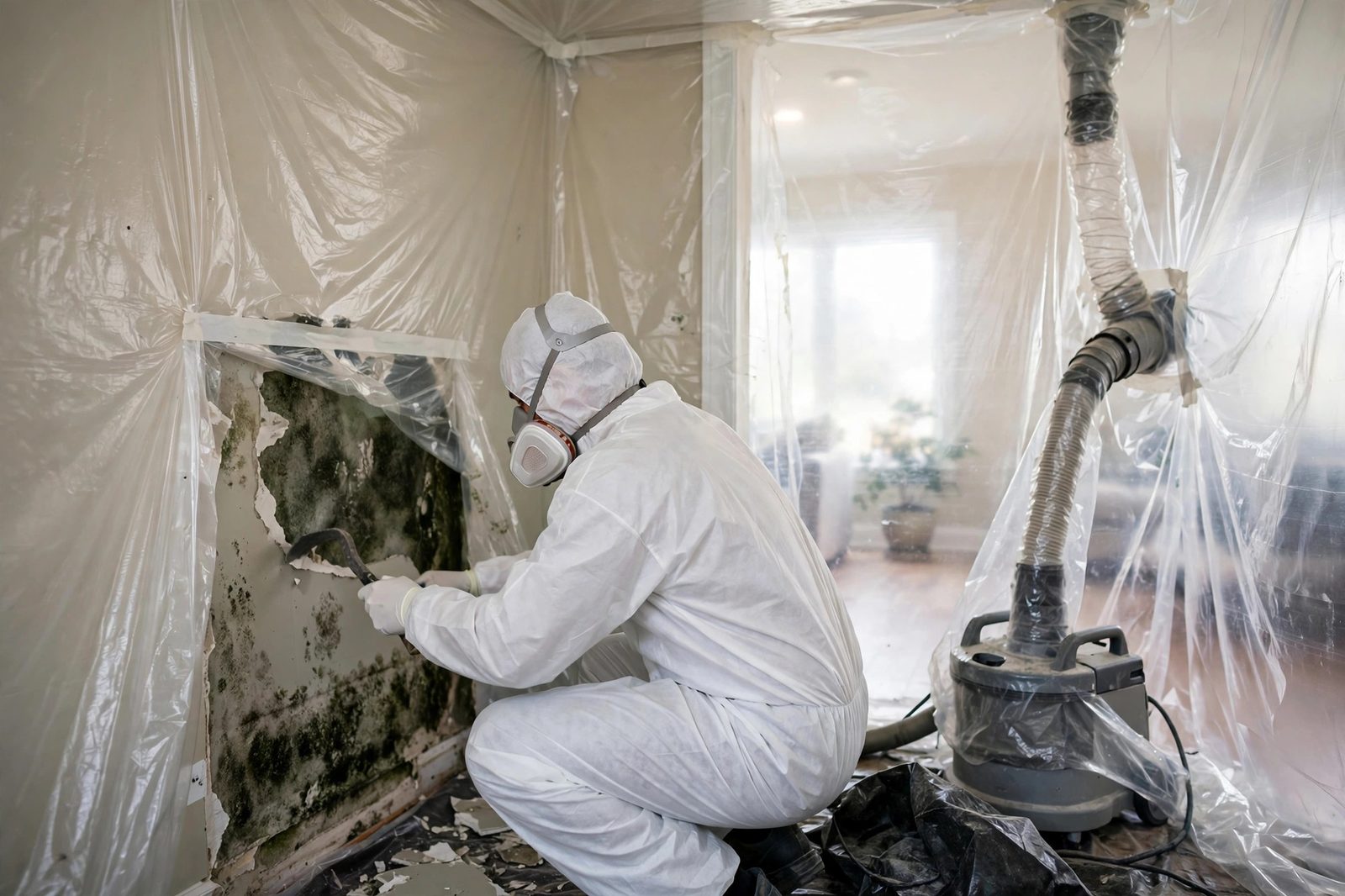
When you contact a mold removal company or a mold remediation company, ask how inspection, containment, removal, cleaning, and drying are sequenced, and ask what records you will receive. The sections below explain each stage in plain language, so you can compare approaches and ask focused questions. For testing detail, see mold inspection and testing.
Professional Mold Remediation for Vero Beach Properties
Professional mold remediation for homes and businesses follows the same core sequence, with adjustments for occupancy, layout, and the extent of growth. Residential and commercial work differ mainly in coordination, access, and documentation, not in the need for containment, careful removal, and drying. Dark growth concerns are covered on the black mold removal page.
Residential mold removal
Residential mold removal focuses on living areas, kitchens, bathrooms, laundry rooms, and other rooms where moisture collects. Residential mold remediation in a home usually involves protecting furnishings, closing off the work area, and planning around daily routines, so removal and cleaning do not spread growth into clean rooms.
Mold cleanup in a home includes removal of affected materials that cannot be cleaned, cleaning of surfaces that remain, and drying until moisture readings fall. Mold mitigation services for a home also include guidance on humidity, ventilation, and leak checks after the work area is cleared.
Commercial mold remediation
Commercial mold remediation serves offices, retail spaces, restaurants, apartments, and other commercial properties where occupancy and business activity shape scheduling and access. Coordination with occupants and managers is planned before containment is set up, so work areas and access routes are clear.
Commercial mold removal planning addresses occupant communication, phased work areas, and records for property managers and insurers, while following the same containment and drying steps used in homes.
Mold repair coordination after removal can involve drywall, flooring, trim, and paint work handled by separate trades, with timing planned after clearance. Ask how rebuild work is sequenced, who coordinates it, and what records are kept for each stage.
The Mold Remediation Process, Step by Step
The mold remediation process below moves from first contact to clearance in order. Each stage builds on the one before it, and skipping containment or drying can allow growth to return. Mold removal experts and mold remediation experts follow a similar sequence on most jobs, adjusting the details to the size of the affected area and the materials involved.
Emergency contact and first response
Emergency contact and first response begin with questions about what was found, where moisture appears, and whether a leak is still active. Answers help decide whether the area should stay closed, whether fans and air movement should stop, and what to document before anyone enters the work area.
First response guidance usually covers leaving growth undisturbed, taking photos and notes, and shutting off a leaking supply line only when it can be done safely. Do not remove wall sections or pull up flooring before the extent of growth is understood.
Inspection and mold damage assessment
A mold assessment looks at visible growth, moisture readings, and clues that point to hidden growth, while a mold damage assessment records the extent of affected materials and the moisture source. Together, these findings shape a mold remediation plan that lists the areas affected, the containment approach, the removal steps, and the drying and clearance checks planned.
Moisture detection during this stage uses readings and visual clues to map wet areas, including areas that look dry on the surface. Notes and photos from this stage support later decisions and provide a record of conditions before work begins.
Mold containment and negative air pressure
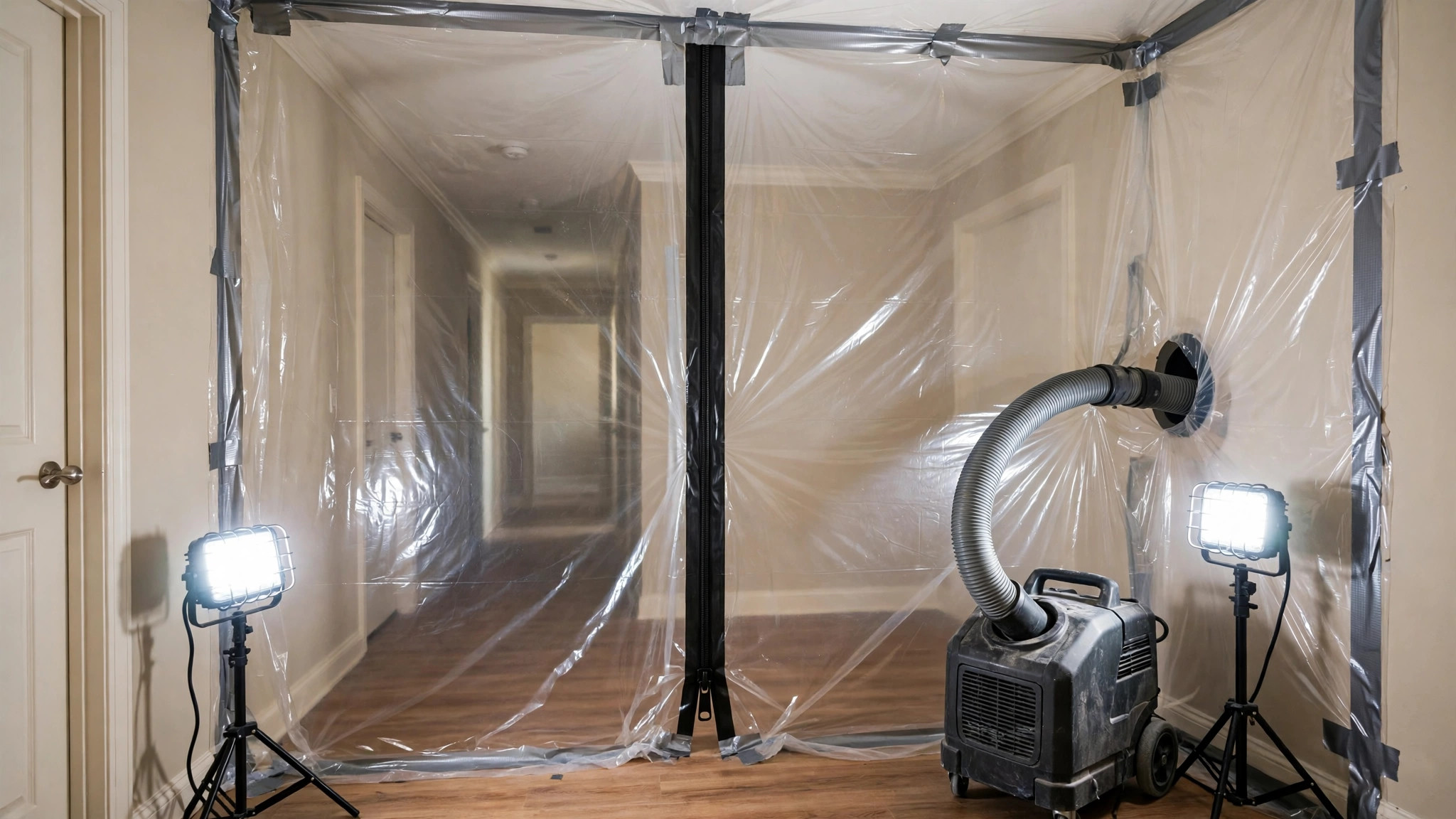
Mold containment limits the spread of airborne particles while removal work is underway. Containment barriers separate the work area from clean rooms, and negative air machines pull air through filters so air moves into the work area rather than out of it.
Negative air pressure containment keeps the work area under lower pressure than surrounding rooms, so particles are less likely to drift into occupied areas. Barriers, sealed openings, and filtered exhaust work together, and containment stays in place until removal and cleaning have finished.
Air filtration with HEPA equipment
Air filtration runs during containment and removal to capture airborne particles released by the work. HEPA air filtration equipment, including air scrubbers, pulls air through fine filters, while HEPA vacuums collect settled particles from surfaces that remain.
Mold spores are present in indoor and outdoor air at background levels, and filtration aims to lower airborne levels in the work area during removal. Filtration does not replace removal of growth or repair of the moisture source, and equipment placement is planned around airflow and room layout.
Removing mold and affected materials
Removing mold and affected materials means taking out porous materials that cannot be cleaned, such as affected drywall, insulation, and carpet padding, while saving materials that can be cleaned safely. Mold colonies on porous surfaces often extend beyond what is visible, so removal margins are planned from inspection findings rather than from surface appearance alone.
Contaminated material removal includes bagging and sealing removed materials before they leave the work area, so growth is not carried through clean rooms. Contents packout and storage may be needed when furnishings and belongings must leave the work area during removal, with cleaning and return planned after clearance.
Cleaning, antimicrobial treatment, and drying
Cleaning after removal addresses surfaces that remain, using methods suited to each material and removing settled particles before treatment. Antimicrobial treatments and antifungal treatments may follow cleaning, depending on the material and the plan, and treatment supports cleaning rather than replacing removal.
Drying and dehumidification follow cleaning, with moisture readings guiding the work until surfaces and assemblies reach drier conditions. Drying equipment placement, airflow, and dehumidification are adjusted from readings, not from appearance alone, and drying continues until readings support the next stage.
Restoration and rebuild coordination
Restoration and rebuild coordination begins after clearance checks support rebuilding. Mold damage restoration at this stage means sequencing drywall, flooring, trim, and paint work after drying, with coordination between mold work and rebuild trades so new materials are not installed over wet assemblies.
Records from each stage, including photos, readings, and notes about materials removed and installed, help show what was done and why. Ask how rebuild work is documented and how questions about the sequence are answered after the work area is reopened.
Hidden Mold: Walls, Ceilings, and Under Flooring
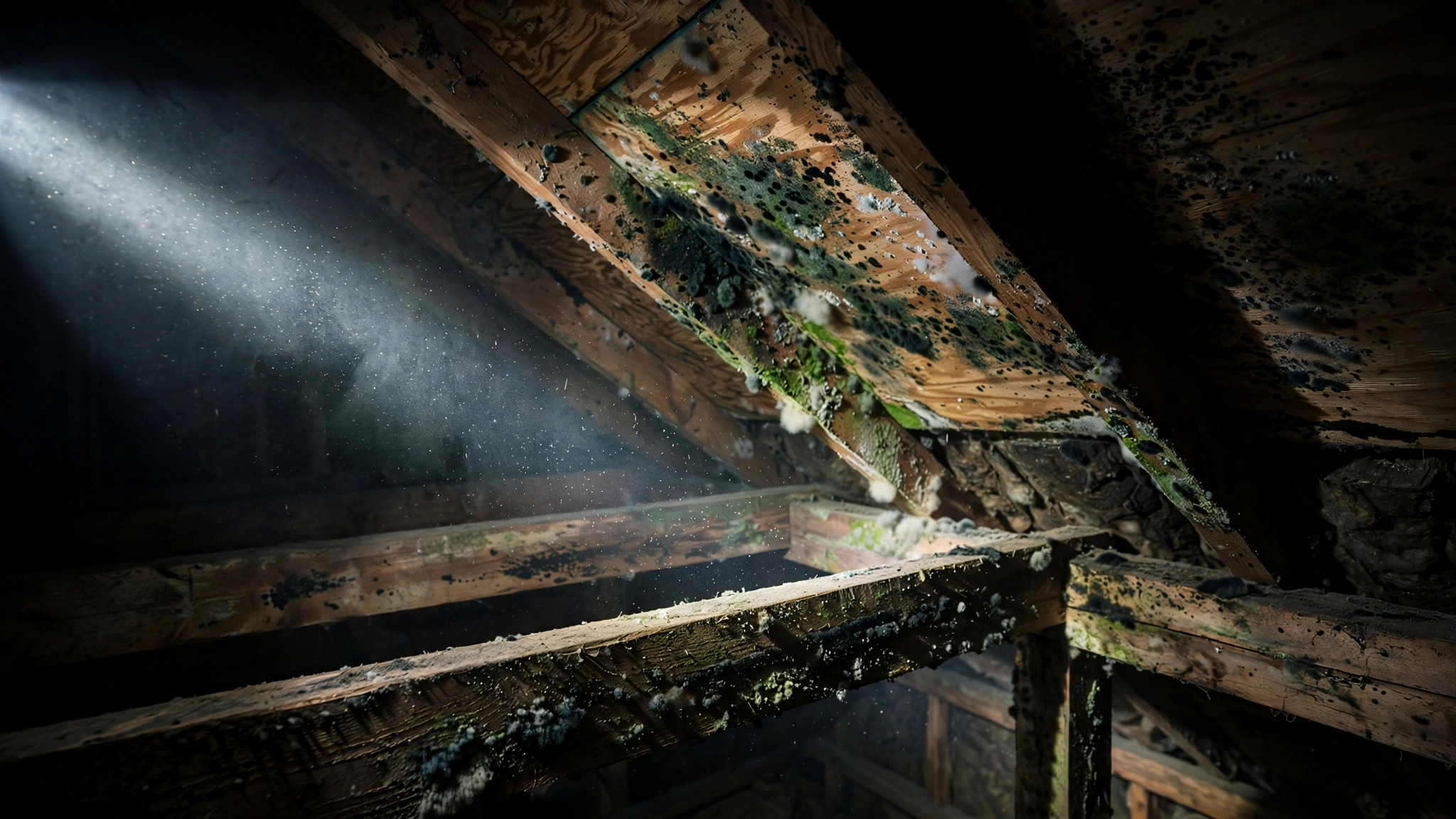
Hidden mold grows where inspection cannot see it directly, often where hidden moisture has stayed in place after a leak or flooding. Mold behind walls, mold in walls, mold in ceilings, and mold under flooring share a common cause: moisture that entered an assembly and was not dried.
How hidden mold is found
Hidden mold is found by following moisture clues, including odor without visible growth, staining, warping, and readings that stay high in one area. Inspection findings, moisture patterns, and the history of leaks and flooding guide where to look next, before any opening is made.
Small, controlled openings may be needed to confirm growth inside an assembly, with containment in place before the opening is made. Findings from each opening shape the removal scope, so work does not expand beyond what inspection supports.
Moisture detection tools
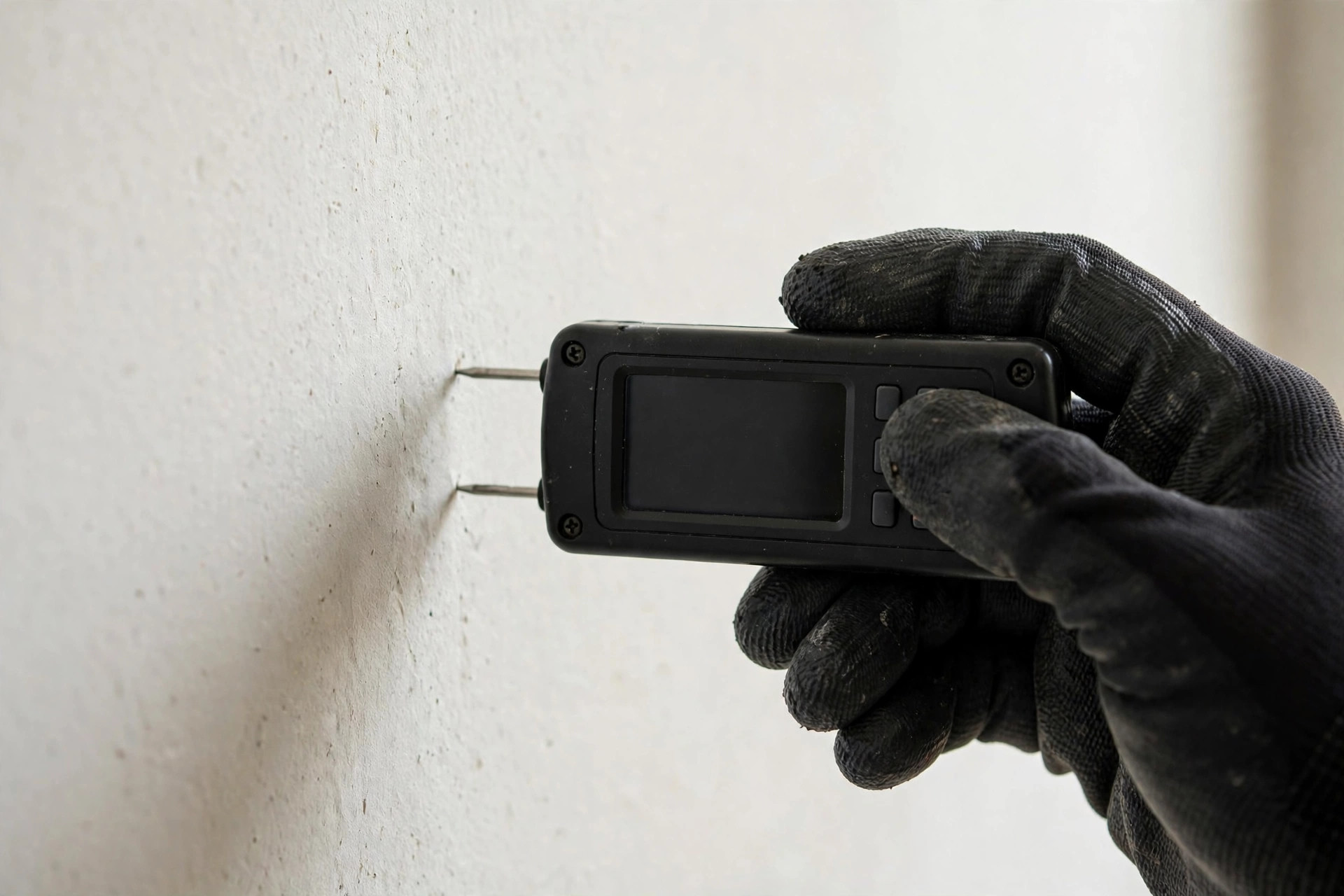
Moisture detection tools help map wet areas without relying on appearance alone. Moisture meters give readings from surfaces and assemblies, thermal imaging shows temperature patterns that can point to wet areas, and infrared cameras support the same kind of pattern check.
Borescopes allow a narrow view inside an assembly through a small opening, so growth and moisture can be checked with limited disturbance. Tool findings are read together with visual clues and leak history, since no single reading proves growth on its own.
Mold and Water Damage Together
Water damage and mold are often discussed together because wet materials can support growth when moisture stays in place. Mold after water damage is not automatic, and the extent of growth depends on how much moisture entered, how long materials stayed wet, and whether drying began promptly.
Mold after a leak
Mold after a leak can develop where water from a roof, pipe, or appliance wets materials out of sight. Roof leak mold concerns often involve ceilings and wall assemblies where moisture enters from above, while burst pipe mold and plumbing leak mold concerns often involve walls, floors, and cabinets where supply and drain lines run.
Slow leaks deserve the same attention as sudden leaks, since steady wetting can support growth even when no puddle is visible. Notes about when the leak was found, what was wet, and what was shut off help shape inspection and drying.
Mold after flooding or storm intrusion
Mold after flooding or storm intrusion can follow heavy rain, rising water, and wind-driven moisture that enters through roofs, windows, and doors. Storm damage mold and hurricane mold concerns share the same starting point: assemblies that stayed wet after the event and were not dried.
Flood cleanup after an event focuses on removing standing water, taking out materials that cannot be dried, and drying assemblies that remain. Sewage backup mold concerns require separate handling for affected materials and cleaning, since the source involves waste water that must be addressed before mold work proceeds.
Water extraction and structural drying
Water extraction removes standing water from floors and assemblies so drying can begin. Structural drying then addresses moisture inside assemblies, using airflow and dehumidification guided by readings until assemblies reach drier conditions.
Extraction and drying are sequenced with containment and removal, so wet materials are handled without spreading growth into clean rooms. Readings taken during drying show whether moisture is falling, staying level, or rising in a new area, and equipment is adjusted from those readings.
What Mold Remediation Costs
Mold remediation cost and mold removal cost are scoped from observed conditions, not from a single rate that fits every property. The factors below explain what shapes an estimate, how scope is set, and what an evaluation covers, without figures that would not fit a specific property.
What drives the price
The price is shaped by the size of the affected area, the number of rooms involved, the types of materials affected, and whether growth is visible or hidden. Testing, containment needs, drying needs, and rebuild coordination also shape the scope, as does access to the work area and the extent of moisture found during inspection.
Properties with hidden growth, multiple wet assemblies, or contents that must leave the work area usually involve more steps than a single visible patch with a clear moisture source. An estimate should list the areas, steps, and materials involved, so the scope can be compared and questioned before work begins.
How estimates are scoped
Estimates are scoped from inspection findings, moisture readings, photos, and notes about the moisture source. The scope lists containment, removal, cleaning, drying, and clearance checks planned, along with any testing or rebuild coordination included.
Ask how the scope was set, what would change the scope, and what records you will receive at each stage. Ask whether the company holds the licenses Florida requires for mold work, and ask how assessment and remediation are kept separate.
What a free evaluation covers
A free evaluation covers a visual check of affected areas, moisture readings where needed, notes and photos, and a discussion of next steps. The evaluation focuses on finding the moisture source and the extent of growth, so later work can be scoped from observed conditions.
An evaluation is not a promise of coverage and does not replace testing when testing is needed. Questions about scope, sequencing, and records can be raised during the evaluation, before any removal work begins.
Mold Removal vs Mold Remediation
Mold removal vs mold remediation is a wording question with a practical answer: removal names one step, while remediation names the full sequence from inspection through clearance and prevention.
What each term means
Removal means taking out growth and affected materials that cannot be cleaned. Remediation means the full sequence: inspection, containment, removal, cleaning, drying, clearance, and prevention guidance, with the moisture source addressed as part of the work.
Companies use the terms in different ways, so ask what steps are included when either term is used in an estimate. A clear scope matters more than the label, and the scope should list containment, removal, cleaning, drying, and clearance checks.
Why complete elimination is not promised
Spores are present in indoor and outdoor air at background levels, so no process can remove every spore from a property. Remediation aims to remove visible growth, clean and dry affected areas, address the moisture source, and lower the chance of new growth, rather than promising an absence of spores.
Understanding why mold keeps coming back helps explain the focus on moisture: growth returns when moisture returns, even after cleaning and drying. Steps that prevent mold from returning center on fixing leaks, controlling humidity, improving ventilation, and checking after storms, so conditions are less likely to support new growth.
Frequently Asked Questions
The answers below give general information about timing, occupancy, and bleach.
A mold remediation timeline is shaped by the size of the affected area, whether growth is hidden, how much drying is needed, whether testing is involved, and whether rebuild work follows. Inspection, containment, removal, cleaning, drying, and clearance each form a stage, and the sequence matters more than speed. Ask how stages are sequenced for the property, what would extend the sequence, and what records mark the end of each stage. Post-remediation clearance and mold post testing, when used, form part of the closing stage, with independent checks arranged separately from the removal work.
Whether you remain in the property depends on the size of the work area, whether containment separates living areas, and whether health concerns or occupancy needs shape the plan. Smaller, contained jobs may allow occupancy in other rooms, while larger jobs may require leaving the work area until clearance checks support return. Discuss occupancy, access, and daily routines before work begins, and talk to a health professional about health questions.
The short answer is to never use bleach on mold as a remediation step. Bleach can lighten surface color while leaving moisture and growth in porous materials, and scrubbing can spread particles into the air. The question of DIY mold removal vs professional help turns on the size of the area, whether growth is hidden, and whether moisture readings and containment are needed. For larger, hidden, or recurring growth, arrange an inspection and keep the area undisturbed until it can be checked.
Get a Free Mold Evaluation in Vero Beach
Call (772) 555-0134 to discuss a free mold evaluation for a home or business in Vero Beach, Sebastian, or Fellsmere. Describe what you see, where moisture appears, and when the problem started, so the next step can be planned from observed conditions.
You can also use the contact page to request an evaluation, read answers to common mold questions, or see mold prevention steps for after the work is done.
Coverage details are listed on the areas served page.